



Differences Between Autologous and Allogeneic
Bone Marrow Transplants
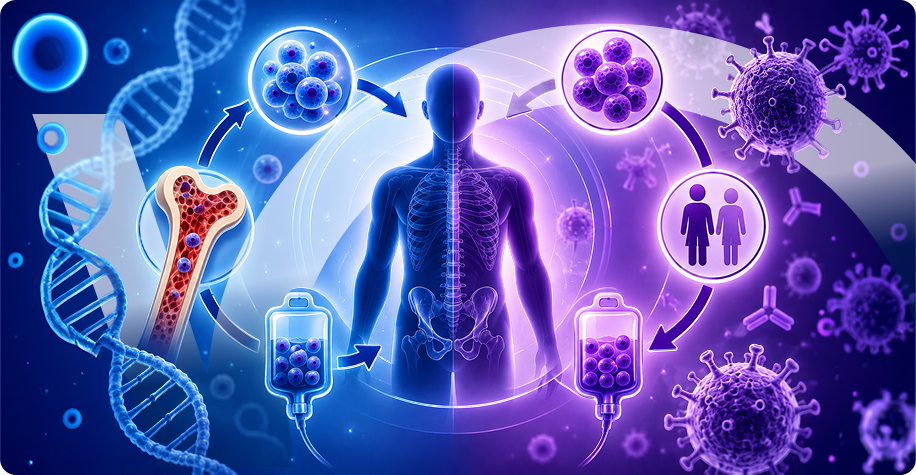
When a patient needs a bone marrow transplant, one of the first medical decisions is to determine which type of transplant is likely to offer the best results based on their condition, health status, and the availability of compatible donors.
The main difference between an autologous and an allogeneic transplant is the origin of the stem cells used during the procedure. While an autologous transplant uses the patient’s own cells, an allogeneic transplant requires a compatible donor.
Learn all about the characteristics of autologous and allogeneic bone marrow transplants below.
What is a bone marrow transplant?
A bone marrow transplant, also known as a hematopoietic transplant, is a procedure that replaces or restores the body’s ability to produce healthy blood cells.
Depending on the source of the stem cells used, the transplant can be classified as:
❂ Autologous.
❂ Allogeneic.
If you’d like to better understand how this procedure works and when it may be necessary, you can check out our comprehensive guide to bone marrow transplants.
What is an autologous bone marrow transplant?
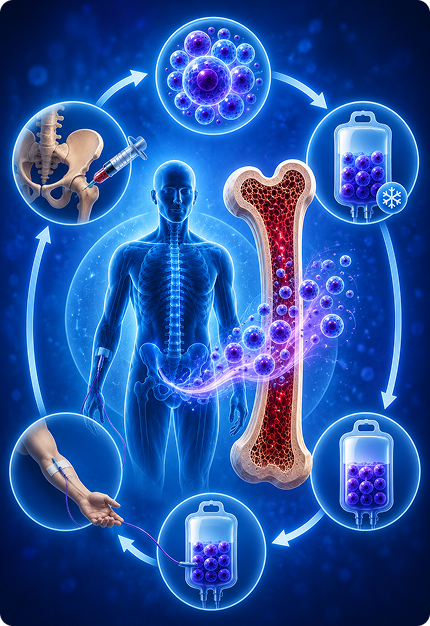
In an autologous bone marrow transplant, the hematopoietic stem cells come from the patient themselves.
Before starting intensive treatments such as chemotherapy or radiation therapy, the stem cells are collected and temporarily stored. They are later reintroduced into the body to help restore the bone marrow.
This type of transplant is frequently used in:
❂ Multiple myeloma.
❂ Lymphoma.
❂ Certain congenital disorders.
❂ Certain autoimmune diseases.
❂ Some solid tumors.
What is an allogeneic bone marrow transplant?
In an allogeneic transplant, the stem cells come from a compatible donor. That donor may be:
❂ A compatible or partially compatible family member.
❂ An unrelated donor found in international registries.
This type of transplant is frequently used in:
❂ Acute leukemia.
❂ Myelodysplastic syndromes.
“The basis of allogeneic transplantation is to replace non-functioning bone marrow with new bone marrow,” notes Dr. Sara Villar, a specialist in hematology and hemotherapy at the Transplantation Unit at the Clinica Universidad de Navarra.
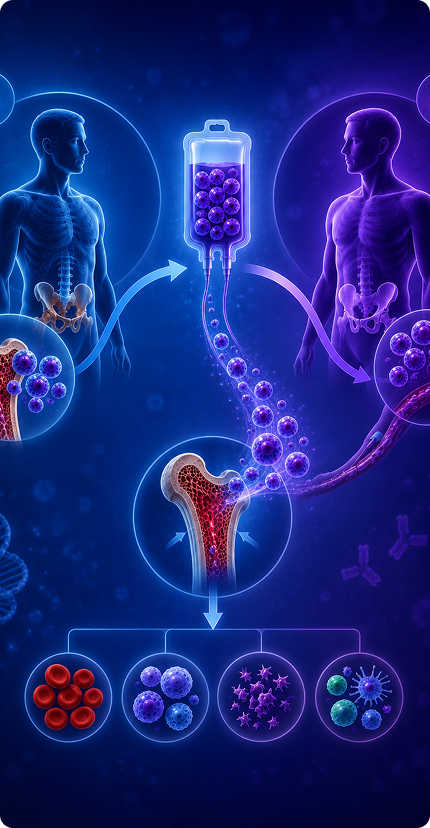
Key differences between autologous and allogeneic bone marrow transplants
Here are some of the main differences between the two procedures:
Characteristic
Source of the cells
Required compatibility
Risk of rejection
Use of immunosuppressants
Complexity of follow-up
Autologous transplant
From the patient
To restore bone marrow function following intensive treatments
Not applicable
Low
Generally not
Generally not
Allogeneic transplant
From a donor
To completely replace the diseased bone marrow
Yes
Higher
Yes
Higher
How are stem cells obtained?
Currently, most hematopoietic stem cells are obtained from blood circulating in the patient’s body through a procedure called apheresis.
Cells from the umbilical cord can also be used, but this is becoming less common thanks to medical advances that allow for donation from donors who are not 100% compatible and the growing donor database.
What are the risks associated with each type of transplant?
All hematopoietic transplants involve risks and require specialized follow-up. However, allogeneic transplants are typically more complex due to the interaction between the donor’s and the patient’s immune systems.
One of the main complications is graft-versus-host disease, which occurs when the donor’s cells attack the recipient’s tissues. For this reason, patients who undergo an allogeneic transplant usually require immunosuppressive medications for months after the procedure.
The following may also occur in both types of transplants:
❂ Infections.
❂ Treatment-related toxicity.
❂ Relapse of the disease.
❂ Hematological complications.
If you’d like to learn more about the transplant process, donor types, and recovery stages, check out our webinar on bone marrow transplants.
The importance of specialized centers and international access
Today, both autologous and allogeneic transplants represent important therapeutic options for patients with complex diseases requiring highly specialized care.
Through VUMI®’s international health plans, insureds can access benefits that facilitate specialized medical care outside their country of residence, including internationally recognized hospitals and medical centers for complex treatments, depending on their plan’s coverage.
Consult your insurance agent to learn how VUMI® international health plans can help you access specialized treatments and high-complexity medical centers around the world. Top of form