



What You Need to Know Should
You Fall Ill While Traveling Abroad

A gastrointestinal infection, an allergic reaction, a minor injury, a sudden fever, or a medical emergency can derail your travels and can cause untold anxiety – as you attempt to find the best medical care when you’re unfamiliar with the local healthcare system.
Although every situation is different, knowing a few basics can help you make more informed decisions and get the care you need more expeditiously.
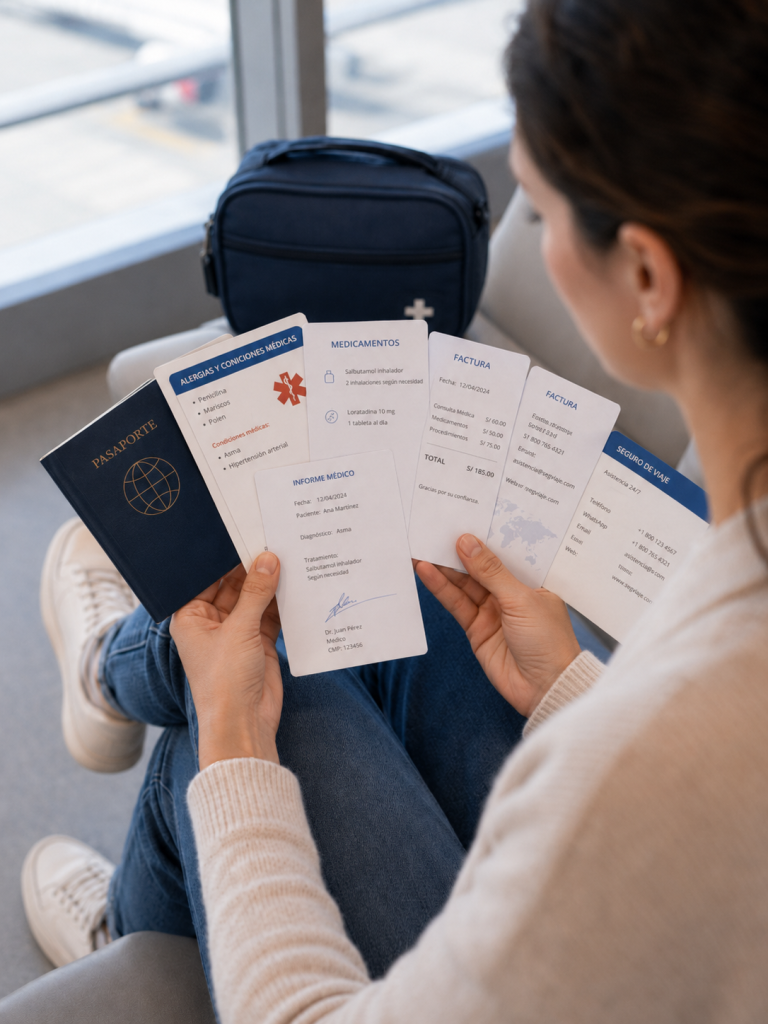
Useful information to have on hand
If you need medical care while traveling, make sure to have these documents to make the process easier:
❂ Passport or ID
❂ Information about allergies and relevant medical conditions
❂ List of medications you take regularly
❂ Details of your travel insurance and available assistance channels
❂ Prescriptions, medical reports and bills related to the care you received
Having this information helps streamline a medical consult and facilitate care coordination when you need additional support.
Assess the situation
Not all health issues that arise while traveling require an immediate visit to the emergency room. However, some symptoms may raise questions about whether medical care is necessary.
For example, swollen ankles after a long flight are usually related to sitting for many hours, although they may require medical evaluation if accompanied by pain, redness or if they affect only one leg. Similarly, symptoms such as a persistent fever, abdominal pain that worsens over time, or an allergic reaction may warrant a medical consultation even when they do not initially seem serious.
When you have doubts about the cause or progression of your symptoms, seeking medical advice helps you determine whether you need in-person care or if the situation can be managed in another way.
Avoid self-medicating without understanding the cause of your symptoms
It can be tempting to buy medication to relieve symptoms and continue your trip. However, the main risk is assuming you know what’s causing the problem.
Various studies on self-medication indicate that among the most common risks are misdiagnosis, delays in seeking medical care, and masking more serious illnesses.
Before taking any medication, it’s advisable to consult a healthcare professional who can guide you based on your specific symptoms and needs.
When should you see a doctor?
Some medical conditions may start with symptoms that seem minor and worsen over time. For example, appendicitis can begin with mild abdominal pain and quickly turn into a surgical emergency.
Seeking early medical guidance can help you:
❂ Better understand your symptoms
❂ Determine if you need in-person care
❂ Avoid unnecessary complications
❂ Continue your journey with peace of mind if the situation is not an emergency
When you’re unsure whether you need to go to a clinic or hospital, telemedicine can be a quick way to get important professional medical advice.

For example, VUMI’s Travel VIP® includes access to telemedicine services, which allows you to have video consultations with doctors in different countries and receive guidance on next steps.
Additionally, depending on the medical evaluation and specific country regulations, this service can provide you with a prescription for medications, and facilitate timely access to treatment without the need for an in-person visit.
What if telemedicine isn’t enough?
In some cases, following a telemedicine consultation, an in-person evaluation, diagnostic tests or treatments requiring direct care may be recommended.
When you’re in an unfamiliar city, finding the right hospitals, clinics or specialists can be an added challenge, especially if there’s a language barrier or you’re unfamiliar with the local healthcare system.
Through the Travel VIP® App, policyholders can locate nearby medical providers*, view available options on a map, and access information to facilitate medical care coordination.
The value of having medical support while traveling
When a health issue arises far from home, having access to medical guidance, prescription medications and tools to locate medical providers can make all the difference.
Travel VIP® combines these services into a single solution so you can access medical support from anywhere and spend more time enjoying your trip.
You can also learn more about the benefits of travel insurance and how it can help in unforeseen situations while you’re abroad.
If you’d like to learn more about the benefits and coverage of Travel VIP®, please contact your insurance agent.
Frequently Asked Questions
If you have allergies, chronic conditions or take prescription medication regularly, it’s advisable to bring an up-to-date list with this information. It may also be helpful to have access to your prescriptions and your physician’s contact information.
Although this may vary by country and medical facility, you’ll typically be asked for an ID or passport, basic information about your symptoms, relevant medical history and details of your travel insurance if you have it.
It’s also a good idea to have a list of the medications you take regularly, known allergies, and your ongoing medical conditions.
Yes, in some cases. Depending on the medical evaluation and the regulations in the country where you are traveling, services such as Travel VIP may issue prescriptions for certain treatments when a new medical condition arises during your trip, such as an infection, an allergic reaction, or a digestive issue, and the condition can be managed through a virtual consultation. The decision will always depend on the physician’s clinical judgment and the applicable local regulations.
Yes. It’s advisable to keep prescriptions, medical reports, test results and invoices related to the care you’ve received. These documents may be necessary for treatment follow-up or to process claims related to your travel insurance coverage.
You may also be interested in
* The providers included in this list are provided for reference purposes only. The availability of services, direct billing, and acceptance of a Guarantee of Payment (GOP) are subject to eligibility verification, provider availability, and prior coordination with the assistance team.