



Robotic surgery for lung cancer:
benefits and recovery in 24 hours
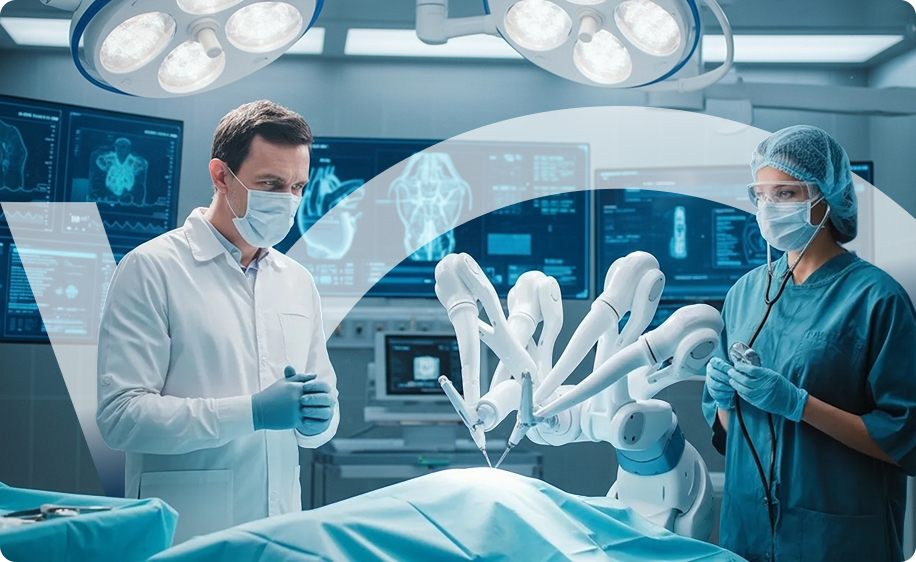
Lung cancer is the cancer type with the world’s highest incidence and mortality rates. However, advances in robotic surgery and minimally invasive techniques are changing treatment protocols, especially when detected early.
Today, many patients can undergo robotic surgery for lung cancer and return home within 24 hours. They experience less pain, fewer complications and faster recovery times than patients who’ve had traditional surgeries.
Discover how this innovative treatment works and how to access internationally renowned hospitals with this specialty.
What is robotic surgery for lung cancer?
For decades, open surgery was the standard treatment. This involved large incisions, greater surgical trauma, more pain and prolonged hospitalizations.
Robotic surgery, in contrast, is a minimally invasive procedure performed through incisions of a few centimeters. The surgeon controls a platform that offers:
- Magnified three-dimensional vision, with up to 10x magnification, identifying growths that would be difficult to see with the naked eye.
- High-precision articulated movements that replicate the mobility of the human wrist.
- Greater precision in the manipulation of delicate structures, allowing more healthy tissue to be preserved.
- Better control of bleeding.
- Access to very small lymph nodes.
“The robot’s movements are precise and safe. The robot does not operate on its own; it is moved by the surgeon. A good surgeon with robotic technology at their disposal can perform many more surgeries with more precision,” explains Dr. María Rodríguez Pérez, a specialist in thoracic surgery at the Clínica Universidad de Navarra and a European leader in this technique.
Greater precision, better results in lung cancer
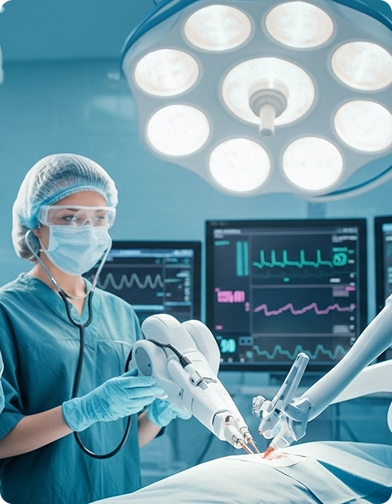
In oncology, every millimeter counts. Robotic surgery allows the tumor to be removed with greater accuracy and, when possible, more healthy lung tissue to be preserved.
This precision not only impacts the surgery itself, but also the information obtained after the procedure.
By removing the tumor with this greater detail, specialists can accurately determine the stage of the cancer (staging) and whether it has spread – a fundamental step in defining the most appropriate treatment.
In addition, the technology incorporates tools such as the use of indocyanine green, which helps to better define the lesion and lung margins, making the procedure safer and more precise.
This comprehensive approach explains why, in specialized centers such as the Clínica Universidad de Navarra, patients with Stage I lung cancer achieve survival rates of over 95% at five years.
Accelerated recovery: a real impact for the patient
One of the aspects that patients value most is the speed of recovery. After the procedure, the patient remains under observation for a few hours and, if the progress is favorable, they can be discharged within the first 24 hours.
As it is a less invasive procedure:
- Pain is usually less severe.
- The risk of complications is reduced.
- Mobilization and breathing exercises begin within a few hours.
In approximately two to four weeks, most patients resume their normal lives.
How can you access robotic surgery for lung cancer?
Accessing this treatment means being able to make medical decisions that are not based on logistical, administrative or geographical limitations. It means having international support that facilitates every step of the process: from the initial evaluation to the follow-up.
With VUMI®, you have access to:
❂ World-class hospitals with advanced robotic technology, such as the Clínica Universidad de Navarra, which has protocols in place to perform diagnostic tests in the country of origin and send them for preliminary evaluation, coordinate treatment in advance if the patient is a candidate and provide follow-up after surgery.
❂ Early detection exams, essential for identifying cancer in its early stages.
❂ Second medical opinions from international experts, providing greater clarity before making important decisions.
❂ Support for highly complex treatments, allowing patients to focus on their recovery with peace of mind.
When faced with a cancer diagnosis, having options that allow access to the most cutting edge treatment can change outcomes and speed recovery